
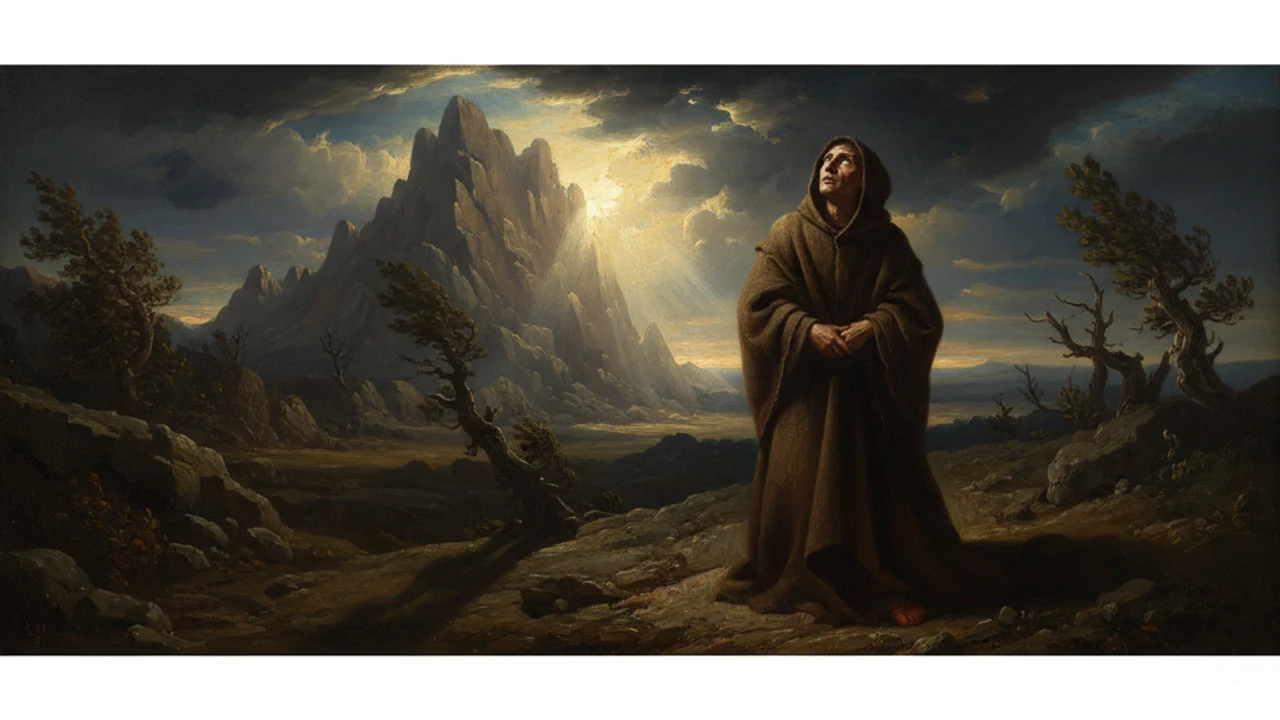
The following is Chapter 9 from Horatius Bonar's book: The Night of Weeping (an audiobook that is coming soon). It may be long since the Holy Spirit first woke us from the sleep of death. Into that deep sleep we know we shall never fall again. The One who woke us will keep us awake until Jesus comes. In that sense, we will sleep no more. Yet much of our drowsiness remains. We are not fully awake, and often the heaviness of our old sleep returns. Living on the world’s enchanted ground, our eyes grow heavy, our senses confused, our conscience dull, and our strength weak. We fall asleep even at our watchtower, forgetting that the night is almost over and the day is near. While asleep, or half-asleep, everything goes wrong. Our steps are slow and lifeless. Our faith grows weak, our love grows cold, and our zeal fades. The freshness of earlier years is gone. Our boldness leaves us. Our plans are careless, and our work sluggish. The cause of Christ is hindered by us instead of helped. We weigh it down and harm it. But God will not allow this. For the sake of his work and for the sake of his people, he will not let it continue. We must be awakened, whatever the cost. We cannot sleep like others. We must stay watchful and sober, for we are children of the light and of the day, not of the night or darkness. God will not permit us to waste life as though it were only for play. Duties done carelessly, prayers half-hearted, a life outwardly blameless but powerless and without influence, words wise perhaps but without depth or weight—these are things God will not tolerate in his saints. It is either the coldness of Sardis, to whom he says, “If you will not watch, I will come on you like a thief, and you will not know the hour I come upon you.” Or it is the lukewarmness of Laodicea, to whom he says, “Because you are lukewarm, neither cold nor hot, I will spit you out of my mouth.” In waking us, God begins gently. He touches us lightly, as the angel did Elijah under the tree, to stir us. He sends some small trial to shake us from our false rest. He lets us hear some distant sound—it may be the troubles of nations, or news of famine, war, or disease far away. If this fails, and we sleep on as before, he comes closer, and speaks through events nearer to home, perhaps among our own family. If this too fails, he comes still nearer, for time is short and his child is still asleep. He strikes at some tender spot until every nerve trembles and every heartbeat quickens. Our very soul is pierced through, as with many arrows. Then we start up like one waking from a long dream, and, looking around, wonder how we could have slept so long. But oh, how hard it is to truly wake us up! It takes blow after blow, over a long time, to do it. Even after we’ve been awakened, we constantly drift back to sleep. So we not only need to be awakened—we need to be kept awake. How much sorrow our spiritual sleepiness brings—how many broken, bleeding hearts! The comfort of “ease in Zion,” enjoyed perhaps for years, has come at a high cost. “Think of living,” said a thoughtful German. Another added, “Your life, even if you are the poorest soul on earth, is no idle dream, but a serious reality. It is your own. It’s all you have to face eternity with. So work like a star—unhurried, yet tireless.” Some Christians do work, but not like those who are truly awake. They carry out duties, but their steps are slow and heavy. Their efforts are forced and cold. They do good things, make good plans, say good words—but lack the vibrant energy of spiritual life. They have no burning zeal—no spring or strength in their labor. They don’t ignite others, and they themselves do not burn. The only thing star-like about them is their coldness. They are likely to face a sharp trial, because they need it. Others are only awake now and then. You can’t count on them, because their enthusiasm changes with their mood. Their naturally impulsive temper—which they may not even realize or try to discipline—makes them unstable. This kind of on-and-off wakefulness achieves little. They build up, then tear down. They ignite a flame, then put it out again. They too are not like stars. They need a deep, ongoing pressure to bring balance to their erratic spirit. Then there are those who always seem awake, but it’s just busy activity and restlessness. They can’t bear stillness. They must always be doing, planning, and moving. Their nervous, impatient nature makes silence and solitude feel like punishment. These people often don’t accomplish much themselves, but their constant activity stirs others and prevents stagnation. Still, their busyness keeps them from receiving the grace they need. Their endless involvement with outward religious things hinders their inward spiritual growth. They may seem like stars—restless and ever-moving—but they are losing the little light they had. They will likely need a hard, painful trial to strip away this false zeal and give them the steady spiritual wakefulness God calls them to. What they need is a deeper spiritual life, and that takes much refining. There are others who work steadily, and seem fervent too. But when you get to know them, you realize they’re not truly awake. They work far more than they pray, and so they soon become like lamps without oil. They may be further along than the previous group, but they still need awakening. They may resemble the star—calm and constant—but their light is dim. It shines faintly on the dark world. What they need is a deeper spiritual life and experience—and they too may face a hard trial to bring it about. The true awakened life is something else entirely. It is deep and intense. It has an atmosphere of calm strength and quiet dignity. It is passionate, but not frantic; active, but not rushed; wise, but not fearful or selfish; bold and firm, but not reckless. It doesn’t show off, and may even be silent—but those nearby can feel its influence. It is full of joy and peace, but without noise or display. It overflows with love and kindness, yet remains faithful and true. This is the wakeful life! But oh, how much we often have to suffer before we truly reach it. Our rebellious human nature resists full surrender to God. We struggle to become the living sacrifices He calls us to be—though it is our reasonable duty. In waking us from our spiritual sleep, God’s discipline doesn’t just make us more active or hardworking. It makes us far more prayerful. And perhaps this is where we feel the awakening most deeply. Nothing awakens prayer like trouble. It drives us straight to our knees, and closes the closet door behind us. In times of comfort, we have many distractions and sources of relief; in sorrow, we have only one—and that is God. Our grief is too deep to share with anyone else. No one else can carry it. Then we awaken to prayer. Before, it was something we did. Now, it becomes everything. Human help fails, and we are left leaning only on God. Our private prayer closets are truly the only places of light in a world that, to us, has grown doubly dark. Everything around us feels gloomy. The skies are clouded, and shadows cover all. But the closet is still bright—still peaceful. How eagerly, how gratefully we retreat there now. We could spend all our time in that quiet island of light that God has given us in the midst of life’s stormy sea. And when we must leave it for a time, how gladly we return. In that sacred solitude, with only God for company, we find hours of quiet peace. There, we can almost forget the storms still raging around us. Prayer becomes more real than ever. We now value it as we never did before. We cannot live without it. Out of both need and desire, we must pray—we must cry out from deep within. Our prayers are no longer formal or routine. Each one is now filled with real life, real energy, and deep earnestness. The heart prays now, and the lips can barely find words to express it. Often, it’s only the groanings that cannot be spoken which rise up to God. Before, we often had lips without the heart—now, more often, it is the heart without the lips. Now we begin to understand how “the Spirit helps our weaknesses.” We start to know what it means to “pray in the Holy Spirit.” There is a new closeness to God. Communion with Him becomes a clear, felt reality. It is deep, personal interaction with the living God. Fresh arguments rise in prayer, new desires are born, new needs come to light. Our emptiness and God’s rich fullness are shown to us more vividly than ever. The longings of our inmost soul are stirred, and our heart cries out for God—the living God. It was sorrow that awakened prayer in David. It was in the belly of the fish that Jonah learned to cry out to God. And it was in the thorny wilderness and the chains of Babylon that Manasseh learned to pray. Church of Christ—chosen people of the Lord—wake up! Children of the light, children of the day, rise! The long winter night is almost over. The morning star is about to rise. “The end of all things is at hand: therefore be sober, and watch unto prayer” (1 Peter 4:7). “Why are you sleeping? Rise and pray, so that you won’t fall into temptation!” (Luke 22:46).