
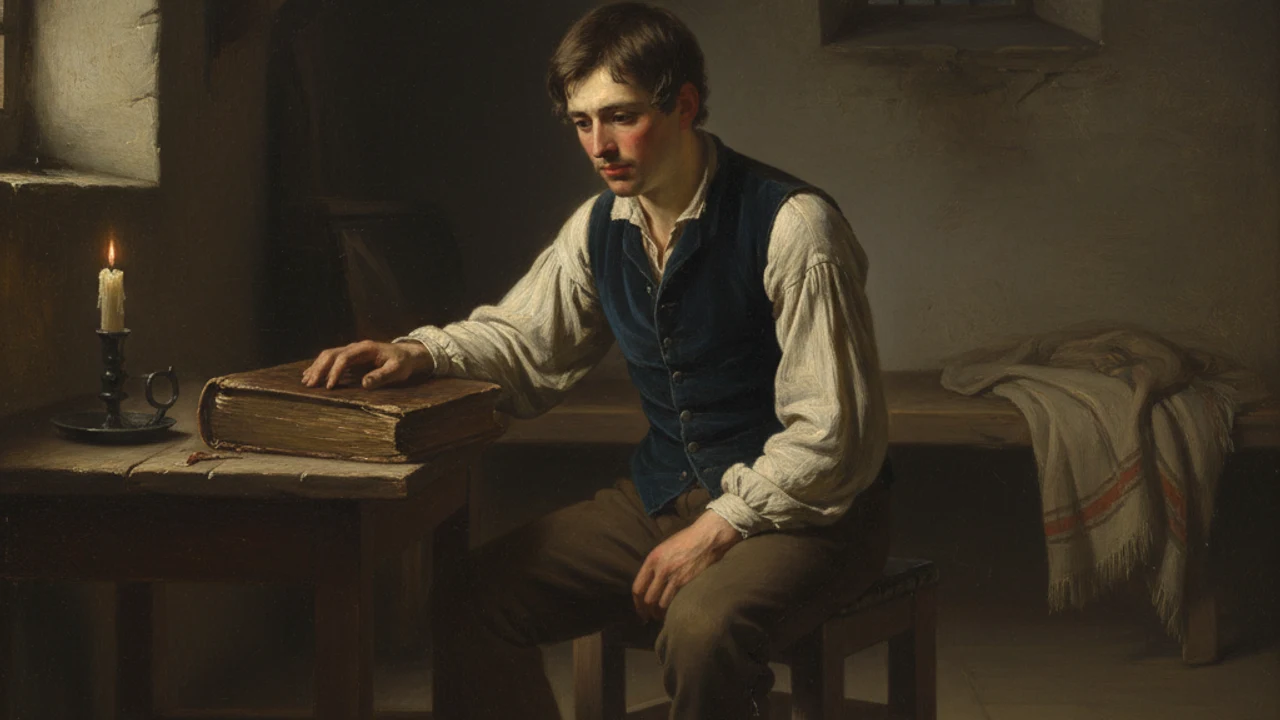
From: Charles Spurgeon Autobiography, Chapter 19 - The Boy-preacher of FensIn my earlier years, I came across a statement in a book of lectures on preaching that deeply troubled me. It said something like this: “If a man struggles to choose a text, he should go back to the shop or the farm—he clearly lacks the ability to be a minister.” Since I often found choosing a text to be a heavy burden, I began to wonder if I should give up preaching and take up some other kind of work. But I have not done so, because I still firmly believe that God has clearly confirmed my calling, even if that lecturer’s harsh words seemed to disqualify me.
That remark weighed so heavily on my conscience that I went to my grandfather—who had been preaching for fifty years—and asked if he ever had trouble picking a subject. He answered honestly that it had always been his greatest difficulty, and that preaching itself was no trouble in comparison. I remember his words: “The problem isn’t that there aren’t enough texts, but that there are so many. I feel torn between them.” We are like a lover of fine flowers, surrounded by the best in the garden, told to pick just one. He lingers between the rose and the lily, unable to choose just one from among thousands of beauties.
I still find this to be true. Choosing a text is a real struggle for me—not because there’s a lack, but because there’s an abundance. The French call it embarras de richesse—an embarrassment of riches. It’s not confusion from having too little, but from having too much—so many truths calling for attention, so many duties to preach, and so many spiritual needs to address.
Often I spend long hours in prayer and waiting just to find the right subject—that is the biggest part of my preparation. I’ve worked hard over many ideas, pondered points of doctrine, shaped outlines from verses, and then buried those outlines as if they never existed. I drift for hours, as if lost at sea, until at last I see the guiding light and can set sail directly toward the goal. I believe that almost every Saturday I come up with enough outlines to last me a month—if I felt free to preach them. But I dare not use them, any more than an honest sailor would bring illegal goods to shore.
I am always sure to have the most happy day when I get a good text in the morning from my Master. When I have had to preach two or three sermons in a day, I have asked Him for the morning subject, and preached from it; and I have asked Him for the afternoon’s topic or the evening’s portion, and preached from it, after meditating on it for my own soul’s comfort — not in the professional style of a regular sermon-maker, but feasting upon it for myself. Such simple food has done the people far more good than if I had been a week in manufacturing a sermon, for it has come warm from the heart just after it has been received in my own soul; and therefore it has been well spoken, because well known, well tasted, and well felt. Sometimes, my texts have come to me in a very remarkable way. While I was living at Cambridge, I had, as usual, to preach in the evening at a neighboring village, to which I had to walk. After reading and meditating all day, I could not meet with the right text. Do what I would, no response came from the sacred oracle, no light flashed from the Urim and Thummim; I prayed, I searched the Scriptures, I turned from one verse to another, but my mind would not take hold of a text; I was, as Bunyan would say, “much tumbled up and down in my thoughts.” Just then, I walked to the window, and looked out. On the other side of the narrow street in which I lived, I saw a poor solitary canary bird upon the slates, surrounded by a crowd of sparrows, who were all pecking at it as if they would tear it to pieces. At that moment the verse came to my mind, “Mine heritage is unto me as a speckled bird, the birds round about are against her.” I walked off with the greatest possible composure, considered the passage during my long and lonely walk, and preached upon the peculiar people, and the persecutions of their enemies, with freedom and ease to myself, and I believe with comfort to my rustic audience. The text was sent to me, and if the ravens did not bring it, certainly the sparrows did.