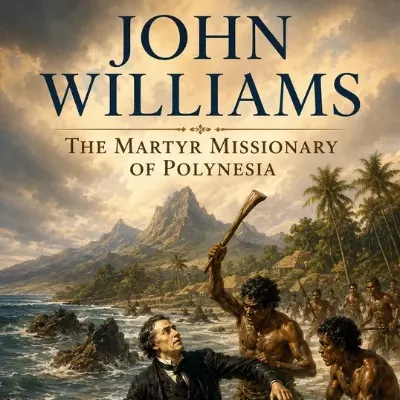
John Williams must ever occupy a prominent and unique position among missionary heroes. His remarkable mechanical genius, his romantic adventures, and, above all, his tragic death, continue to invest his name with a peculiar charm. His place among the champions of the Cross is distinctly his own, and in his particular form of service, he is certainly the equal of Carey or any of the mighty men of missionary renown.
Introduction to John Williams’ Missionary Journey
John Williams, known for his resilience, ingenuity, and unwavering faith, stands as a prominent figure in missionary history. Born in 1796, he dedicated his life to spreading Christianity across Polynesia, a calling that eventually led to his tragic martyrdom.
Early Life and Conversion of John Williams
John Williams’ journey toward faith and missionary work began with a pivotal conversion in his youth. Influenced by devout mentors, he overcame a rebellious phase to embrace Christianity and later felt a strong calling to missionary service.
John Williams Setting Sail: Missions in the South Seas
Williams embarked on his first mission journey in 1816, setting out for Polynesia. His shipbuilding skills, acquired during his apprenticeship, became invaluable in constructing vessels for his missions, including his famed ship *The Endeavour*. His dedication to the people of Polynesia was matched only by his adventurous spirit and skill in learning local languages.
John Williams Building Relationships and Spreading the Gospel
Through humility and kindness, Williams won the trust of Polynesian leaders and local communities. His approach to teaching Christianity incorporated respect for native cultures, with a focus on educating, housing, and providing for the basic needs of the communities he served.
Challenges and Conspiracies John Williams Faced
Williams faced numerous obstacles, including cultural resistance, health issues, and even conspiracies against his life. Yet, through perseverance, he continued his mission work, often depending on faith to overcome these trials.
The Fruits of His Labor: Churches and Schools
In addition to preaching, Williams established churches, schools, and social reforms that emphasized the value of family, education, and productive work. His efforts inspired local leaders and laid a strong foundation for the future of Christianity in Polynesia.
Legacy of the “Apostle of Polynesia”
Williams’ legacy lives on through his impact on Polynesia, where he is remembered as a man of faith, vision, and courage. His life story, marked by dedication and martyrdom, continues to inspire generations of Christians.