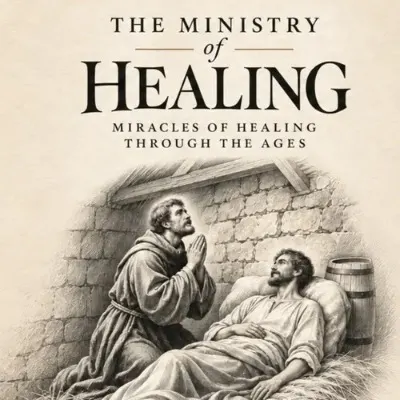
Have there been miracles since the time of the apostles? The common answer has been a firm "no." A recent survey in a religious journal asked ministers, teachers, and theology professors for their views. Most responded, and nearly all agreed that the age of miracles ended with the apostles.
Some of these responses suggested the question had not been deeply considered. A few even tried to avoid the issue by asking, "What is a miracle?" Only one or two supported the idea that miracles are possible in every age and have occurred throughout Church history.
A Difficult Task
This little book will likely not gain much support for its views. The ideas I present go against the majority opinion of theologians today. I am undertaking a challenging and undesirable task. The current trend is to adapt Christianity to fit the modern age. However, it may seem bold to suggest that the real need is for the age to adapt to Christianity. Yet, this present age can never fully align with a faith that is heavenly in origin, purpose, and end. Still, it is not presumptuous to say that the Church needs to be reshaped according to the apostolic model and restored with apostolic power.
Skepticism About Miracles
Isn’t it clear that both skeptics and theologians who doubt modern miracles may cause believers to lose faith in the supernatural? We have often seen this. A sincere believer shares a remarkable answer to prayer—perhaps healing or deliverance—claiming that God has done something extraordinary. Yet, we notice how slowly and reluctantly Christians listen to these stories. They look embarrassed, almost ashamed, as if waiting for the minister to save them from what they see as fanaticism. The Church has grown cautious about miracles.
The World’s Discomfort with Miracles
Just as a ritual-focused religion dresses its ministers in vestments, a rational religion dresses God's works in the guise of natural law. Everything must be explained by cause and effect, hiding God’s direct action. The world dislikes miracles because it cannot understand or replicate them. Miracles make those who see God only through nature uncomfortable, as they bring them too close to the divine.
Fear of Fanaticism
Even sincere believers often fear miracles, dismissing the idea that they could occur today. This fear may arise from a healthy concern about fanaticism. However, fanaticism is often just the extreme form of doctrines separated from the broader Christian faith. Every truth needs the balance of being in harmony with other truths. If the Church isolates or denies a true doctrine, allowing it to become the possession of a specific sect, it is not surprising if that doctrine becomes unbalanced.
Fanaticism and Truth
We should not dismiss a doctrine simply because it has led to fanaticism. History shows that religious revivals, such as those led by Luther and Wesley, caused turmoil more from the reaction of wounded falsehood than the creation of new falsehoods. Fanaticism often arises around truths that have been neglected. However, we are not excusing fanaticism, which has no rightful place. We believe that regeneration, where God directly renews the soul, is a miracle. Healing, where God restores the body, is also a miracle.
Opening Our Eyes to the Supernatural
Christians today need their eyes opened to the supernatural. Blinded by unbelief, many of the Lord's faithful servants would not recognize His hand, even if He performed miracles. It is difficult for those whose needs have always been met without miraculous provision to believe in such things. The Lord says, "anoint your eyes with eye salve, that you may see." If we do not see what others claim to have witnessed of God’s work, it may be because we have become self-satisfied.
God's Power in the Lives of His Children
God’s children, especially those who have endured great trials and distress, may have experienced His power in ways we do not understand. Let us not be angry with those simple Christians who believe they have felt the Saviour’s healing touch. Nor should we limit the Lord with theories about the end of miracles. Both rationalists and traditionalists protest against miracles today. But what if some were to speak of "the crown rights of Immanuel," insisting on His right to work as He wills? Should we be condemned for unbelief?
The Need for Divine Power
We must take advantage of all divine assistance available. If there are any legacies of power left unclaimed, we should claim them. Consider the weaknesses of Protestant churches today. Notice the reliance on music, buildings, and the pulpit's culture and eloquence. Churches focus on festivals to raise money, rather than on the Spirit's power.
This is a significant decline from the early Church, where the Lord "confirmed the word with signs following." How deeply we need the demonstration of the Spirit in our time!
Witnessing God's Miraculous Power
Some may say that the renewal of souls by the Holy Spirit is all we need. But have they seen a drunkard freed from addiction through prayer? Have they witnessed someone dying of disease restored to health by God's power? Those who have seen these things know the fervent thankfulness that follows such miracles.
If they have not seen these things, they have missed the evidence that convinces even the most skeptical. These are the practical implications of the issue we are discussing.